Everything I Learned, I Learned in a Chinese Restaurant by Curtis Chin (audiobook)

Rating: 2 out of 5 egg rolls

Whew. This too me WAY too long to listen to. I have to admit that the author himself as a narrator is not the most exciting to listen to. I had so many days in between listens but because it’s a memoir, there wasn’t really a loss of pace. I do wish he had gone deeper into some of his stories, especially in college, and I have to wonder…did any of those professors or people around him in his stories reach out to him after? Like that one prof in the narrative class?? She seemed awful so I wonder what she thinks about his perspective on it.

I did appreciate learning about what it must have been like in the growing up in the 80’s in Detroit, it was such a special time in the history of Detroit. I think Chin did a really good job of showing us Detroit in a way that is meaningful but real. As a native Michigander, Detroit is one of my favorite cities, and I hate when people tear it down. I also appreciate his perspective in the intersectionality of being a gay Asian boy in the 80’s, at the height of the AIDS epidemic and the Vincent Chen case in Detroit. What I didn’t like…was his crazy hold on the Republicanism but also his hold on liberal ideas…like he was definitely confused growing up and it felt like he only felt that way to spite his parents. It was…weird.

However, I’m giving this a 2 star because I became so disinterested that I finally would work while listening, just to have sound in the background. Ultimately, his story just didn’t resonate with me (which, valid, I’m a 38 year old mixed race Mexican American who grew up in the 90’s) but it wasn’t because it wasn’t interesting, but because it COULD have been interesting and he just…didn’t make it so? It’s hard to describe. Like there were so many places where he could have extrapolated more on parts of the history, or on his family, and yet, he would just cut off a story and never come back to it. I finished it and realized that I don’t even know if he told his family he was gay?? That’s how dissociated I became from his story. I appreciate that he is the co-founder of the Asian American Writers Workshop (that is, actually SO COOL) and that he found inspiration for writing though poetry, but honestly, his prose was so dry and chock full of the very stereotypes he hated, that I have a hard time believing that he did that. Also, why wouldn’t he have found inspiration from all the letters to the editor he had been writing since he was a child?? That would have made more sense to me.

Anyways, this was just ok, and I wish it was better, but hey. It’s his story. Who am I to judge, really? Thank you, Curtis, for sharing your life with us.

“Welcome to Chung’s. For here or to go?”
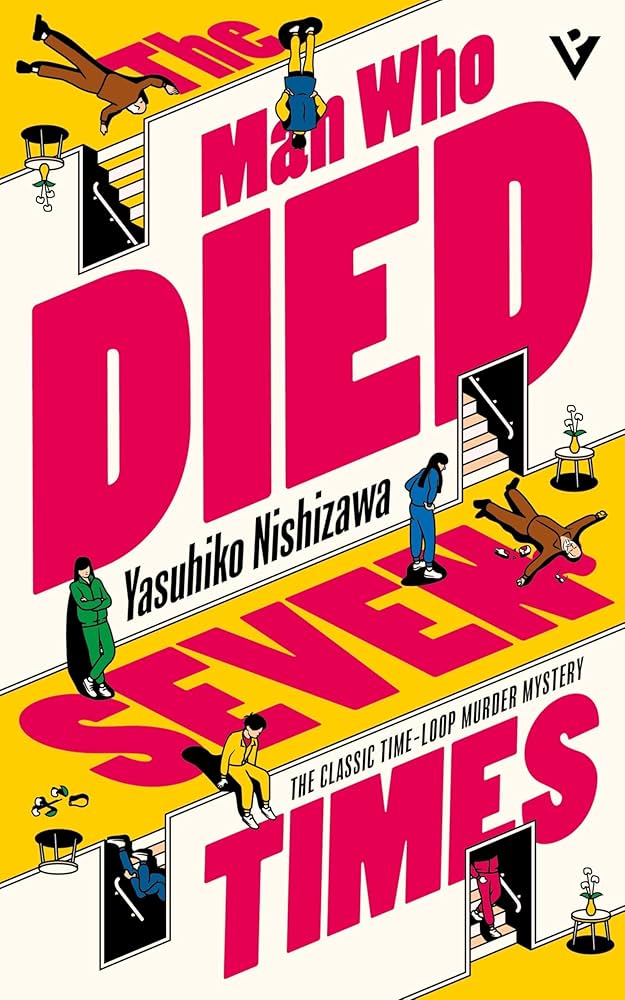
The Man Who Died Seven Times by Yasuhiko Nishizawa

Rating: 3 out of 5 time loops

That was certainly a wild ride. An interesting Who Dun It, translated from it’s original language to English, Nishizawa certainly brought a murder mystery with a CRAZY side of family drama.

We have the story of Hisataro, a 16 year old in a family fighting over an inheritance that hasn’t even come to fruition yet. His grandfather has been inviting the whole family to his home for the last few years so that he can “choose” an heir to his fortune, should his childless daughter ALSO pass, who is his initial heir. His other two daughters left the family as soon as they could, as he was not a great dad, gambling a lot and basically making them grow up in poverty. Hisataro, however, has a special ability: he can relive a specific day, over and over again, a la Groundhog Day. He’s not able to PICK what day he relives, though, and this time, he ends up reliving the day his grandfather dies mysteriously. So he spends the next few “time loops” trying to find out who could have killed Grandfather. Hilarity and family drama ensue.

There is definitely lots of cultural differences between Japan and the US, especially in terms of marriage. Generally, we try NOT to marry our first cousins, and we try to marry when we are of age…not 16/17 years old, if we can help it. Since a lot of that seemed to be cultural (especially given that I believe the book was originally published in the late 90’s, I gave that bit of the book a pass. The rest of the drama though?? Oh man there was so much tea the pot was OVERFLOWING. I can’t count how many times I covered my own mouth in disbelief of what was happening!

Unfortunately, what brought the whole thing down from 5 stars to 3, was the last two chapters. The epilogue was COMPLETELY unneeded and honestly, the explanation for why everything happened seemed…too tidy? I don’t know. I just didn’t really vibe with how those two chapters went with the rest of the book. So because of that, I cannot give this a full 5 star rating. I did enjoy myself immensely and had a fund time for the rest, and I can’t say I saw the “twist” coming, but yea. I think if nothing else, the epilogue could have remained out, for sure.

“I once read somewhere that when we make a mistake, the blood rushes to our heads, causing us to make even more of them.” – Hisataro

See what is on my TBR, what I’m currently reading, and more, on my Goodreads profile here.

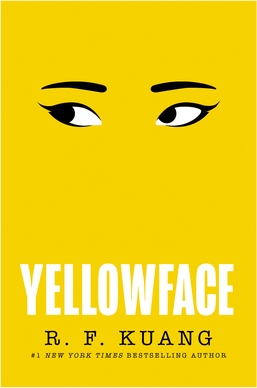
Yellowface by R.F. Kuang

Rating: 5 out of 5 Twitter mentions

WHEW CHILE! I am still reeling from how good this book was! I listened to this on Libro.Fm, if you haven’t used them, you should!!!

Wow. I have never, and I mean NEVER, hated a protagonist more in my life. Which is a testament to how much I loved this book and the author, that I still rated it 5 stars because of that. It’s like hating the evil villain so much in a movie but it makes the movie SO GOOD because of it!

Juniper Hayward is a mediocre white woman writer who is friends with Athena Liu, a rising Asian woman author. She has seen so much success, it’s actually made June jealous. When she witnesses Athena’s death in a freak accident, she manages to also steal the last manuscript that Athena was working on. It’s about Chinese laborers in France during WWI, but June believes she can publish it-as her own-and that no one will know. She finds a publisher and lets them rebrand her as Juniper Song, ambiguous enough, and the story skyrockets her into fame. Juniper is on cloud 9 and attending workshops and speaker series and all kinds of things. Sure, there’s some pushback, but she is good at deflecting and lying her way through why she thought a white woman could tell this story. It isn’t until a blogger finds some *interesting* similarities that suspicion falls on Juniper and so to combat it, she writes another story….which becomes her downfall.

I’m not going to lie, listening to her downfall had me cackling with glee the whole time. Juniper was SUCH a horrid person that I literally could not wait for her to be “canceled” as they call it. She was the epitome of white savior complex and just didn’t want to take accountability at all. You would think this would make me hate the book, but I think, as a Latina woman who sees this happen all the time, I was so gleeful to FINALLY feel like I was seeing justice. I believe that the point of the book is to hate her, that her place in the narration is to be unreliable and unlikeable. I think there tries to be sympathy, but I just could not muster any. I was so invested in seeing her complete and utter destruction. I felt almost bad about it, but I also felt safe enough in the narration to feel ok about feeling those feelings.

The last few chapters though, she becomes completely unhinged. At first, I’m so invested in like, WHO is doing this? To what end exactly?? She is masterfully manipulated, and it was by someone I definitely did not see coming. It was pretty cruel…but also, she needed to just let the lie out. Her delusion was getting to be so much. June Hayward was a terrible and fantastic character.

This is definitely high on my list so far this year!